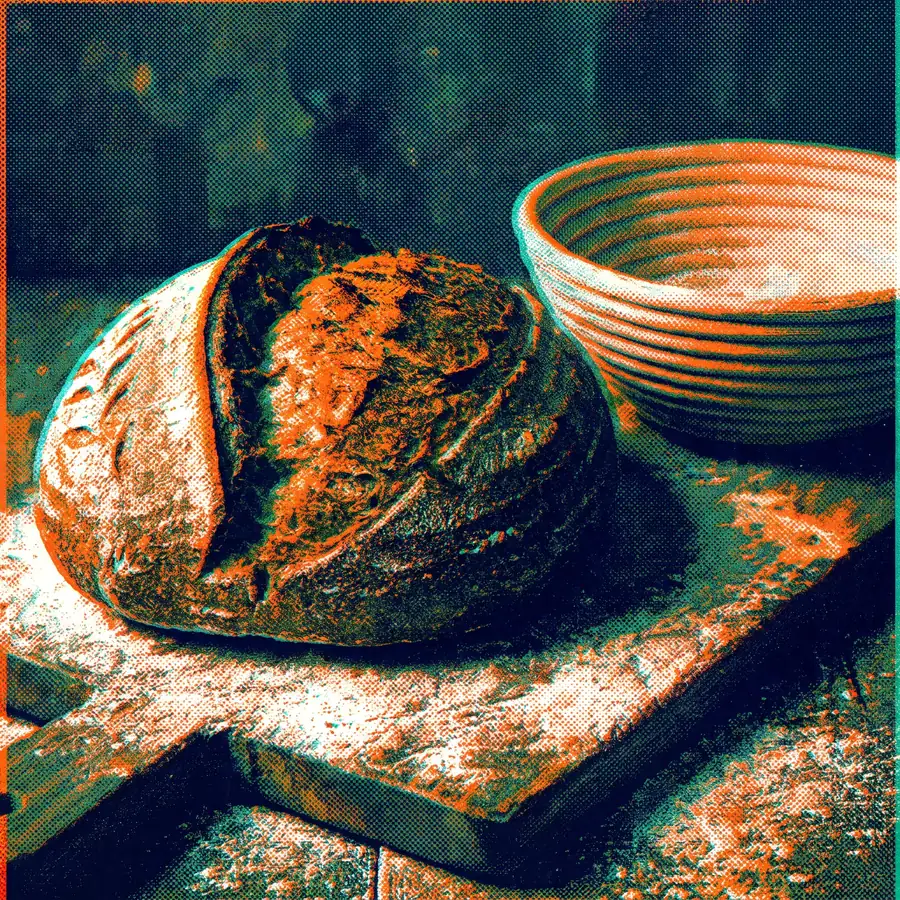
Our starter is older than the shop. Her name is Maud, she lives in a glass jar by the back door, and every loaf we have ever sold began with a spoonful of her.
Where Maud came from
In the spring of 2011 I mixed flour and water in a jam jar in my apartment above a launderette in Frome. I was not planning a bakery. I wanted one good loaf on a Sunday. For nine days the jar did very little. On the tenth it smelled of green apples and doubled in four hours, and that was that.
Maud moved house with me three times before she moved into the shop. She has traveled on a train in a coat pocket, stayed with a neighbor for a two-week stretch, and once, when a fridge broke, been dried on baking paper and mailed to ourselves in an envelope.
People ask whether she is still the same starter. The yeasts in the jar have changed with every bag of flour, every summer and every new kitchen. What has stayed the same is the routine, and the routine is the real secret.
The daily routine
Every evening at six, whoever closes the shop feeds Maud. We keep 50 grams of the old starter and add 100 grams of stoneground white flour, 25 grams of wholemeal rye and 125 grams of water at about 26 degrees. We stir, scrape down the sides, set the lid on loosely and leave her on the shelf by the oven.
By five the next morning she has risen to the line we draw on the jar and has just begun to fall back. That is the moment we use her. Too early and the dough is slow; too late and the bread tastes sharp.
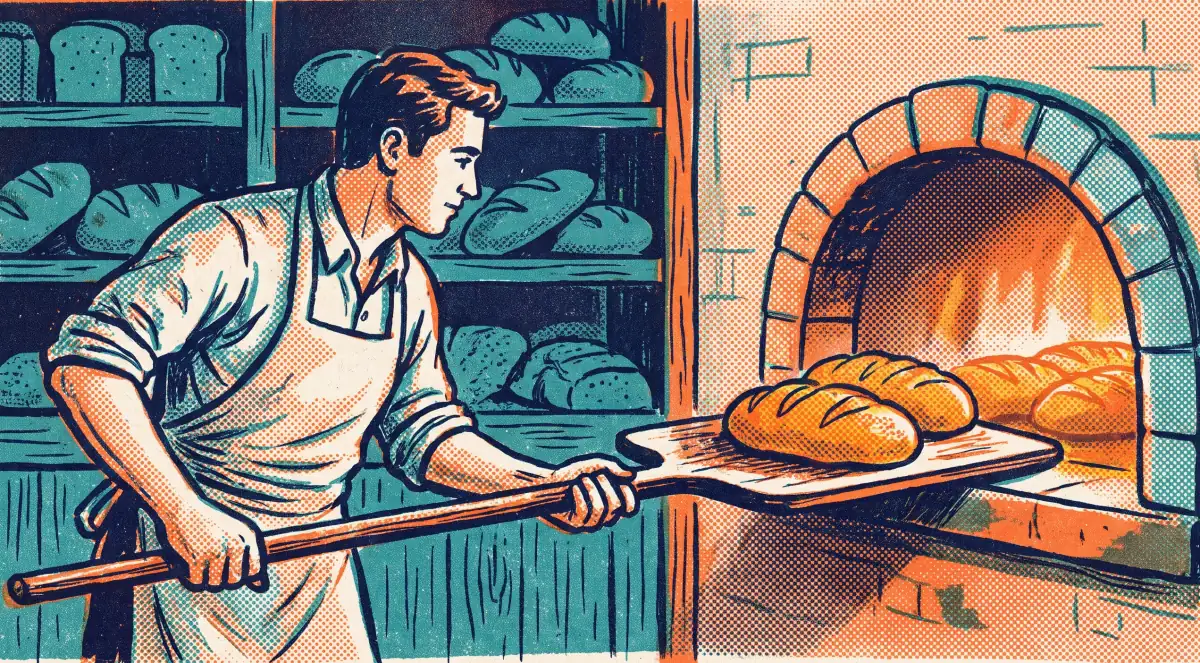
On Sundays, when we are closed, Maud goes into the fridge after her feed. The cold slows her right down, so she is happy to wait until Monday evening.
What 15 years have taught us
Three things matter more than any recipe:
- Feed at the same time every day. A starter likes a clock more than it likes a recipe.
- Keep to one flour. If you must change it, change a quarter at a time over a week.
- Watch the jar, not the timer. On a hot day she is ready an hour early.
And keep a spare. Two small packets of dried Maud sit in the office drawer, sealed and dated, in case the worst ever happens.
Bake with her at home
We sell Maud in small jars at the counter, fed that morning, with a feeding card. She costs $4, and she has never been easier to keep alive than she is today.