June is the month the farm stops looking like a farm and starts looking like a party. This is what goes into the buckets each morning, and how to keep the same flowers going in your own garden.
Sweet peas, every other day
The sweet peas went in as seed in October, spent the winter in the cold greenhouse, and were planted out along the hazel frames in April. By the second week of June they are shoulder high and flowering faster than we can cut them.
That is the whole secret with sweet peas: you have to keep cutting. If a single flower is left to make a seed pod, the plant decides its work is done and slows down. So every other morning, before the sun is on them, two of us walk the rows with buckets and take every open stem.
We grow eleven kinds, but the ones that end up in nearly every bouquet are a deep claret, a pale lilac with a white edge, and an old cream one that smells the strongest of all. In a small vase on a kitchen table, ten stems will scent the whole room for four days.
The rest of the June bucket
Around the sweet peas, the rest of the farm is filling in. These are the flowers that carry a June bouquet, roughly in the order they arrive:
- Peonies, the last of them, cut in tight bud so they open in your vase, not ours
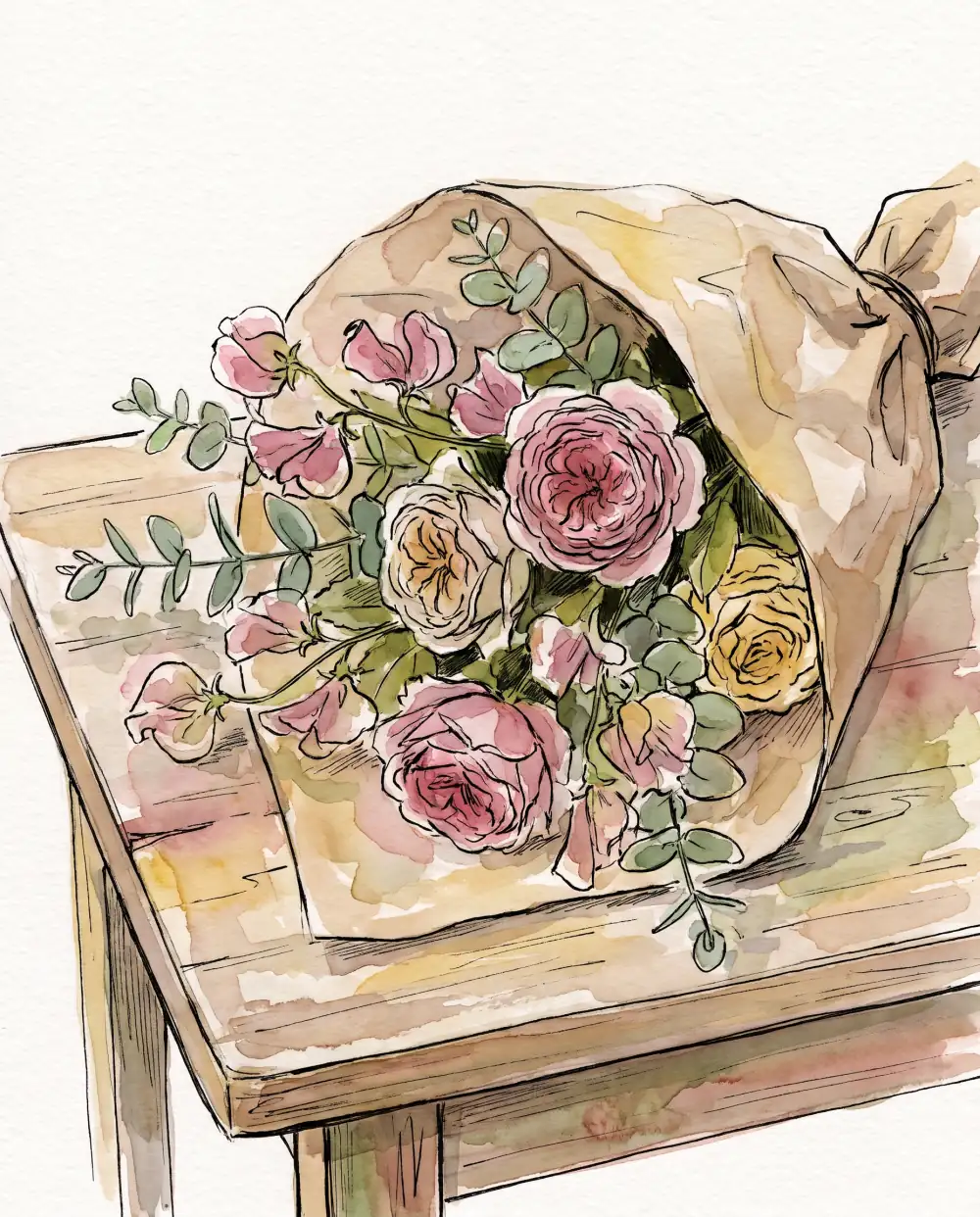
- Garden roses, mostly soft apricots and blush pinks, picked as the outer petals loosen
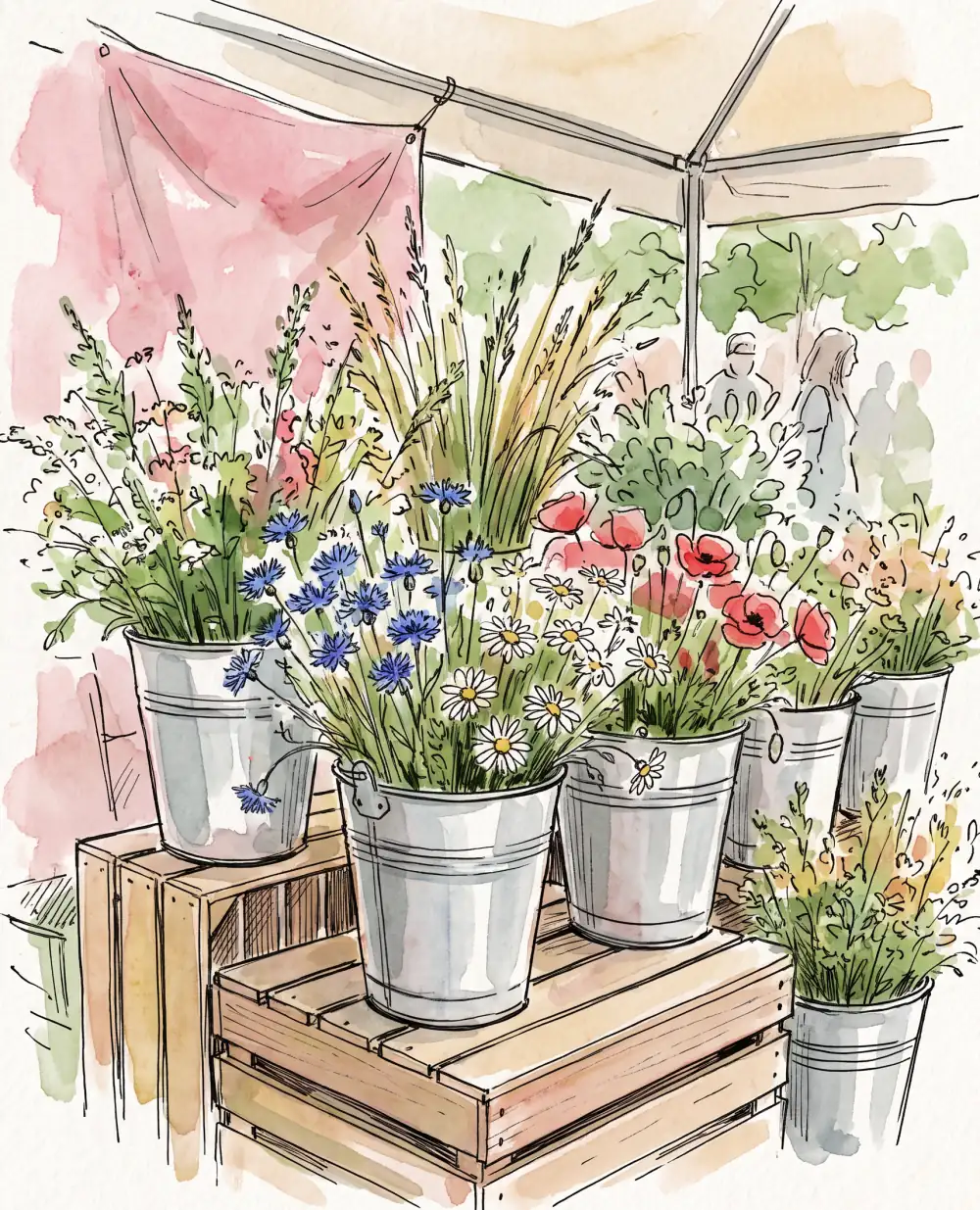
- Cornflowers in blue, plum and white, which last a surprising ten days in water
- Ammi, the lacy white umbels that make everything else look more expensive
- Grasses: quaking grass and a little wild oat, for movement
Cutting tips for your own garden
Cut in the cool of the morning, into a clean bucket with a hand's depth of water. Take the stems longer than you think you need, strip every leaf that would sit under the water, and leave the bucket somewhere cool and dark for an hour before you arrange anything.
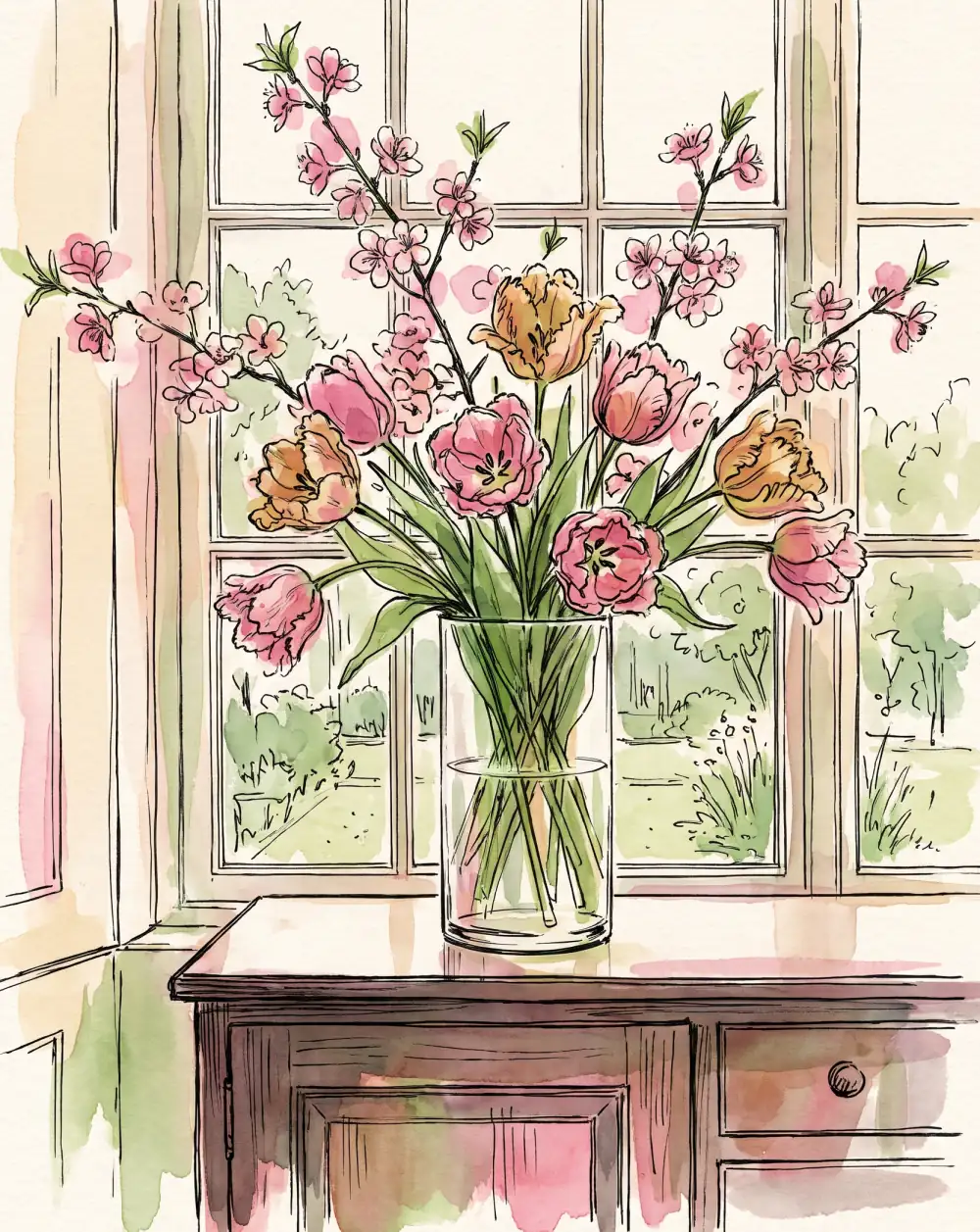
At home, change the water every two days and take a centimeter off each stem when you do. Keep the vase out of direct sun and away from the fruit bowl: ripening fruit gives off a gas that makes petals drop sooner.
Not everything gets cut. We leave the ends of the cornflower rows and a strip of scabious for the bees, and by the end of the month the whole field hums. It is the best sound on the farm.
Next month the dahlias start, and the farm turns orange. We will write about those in July.