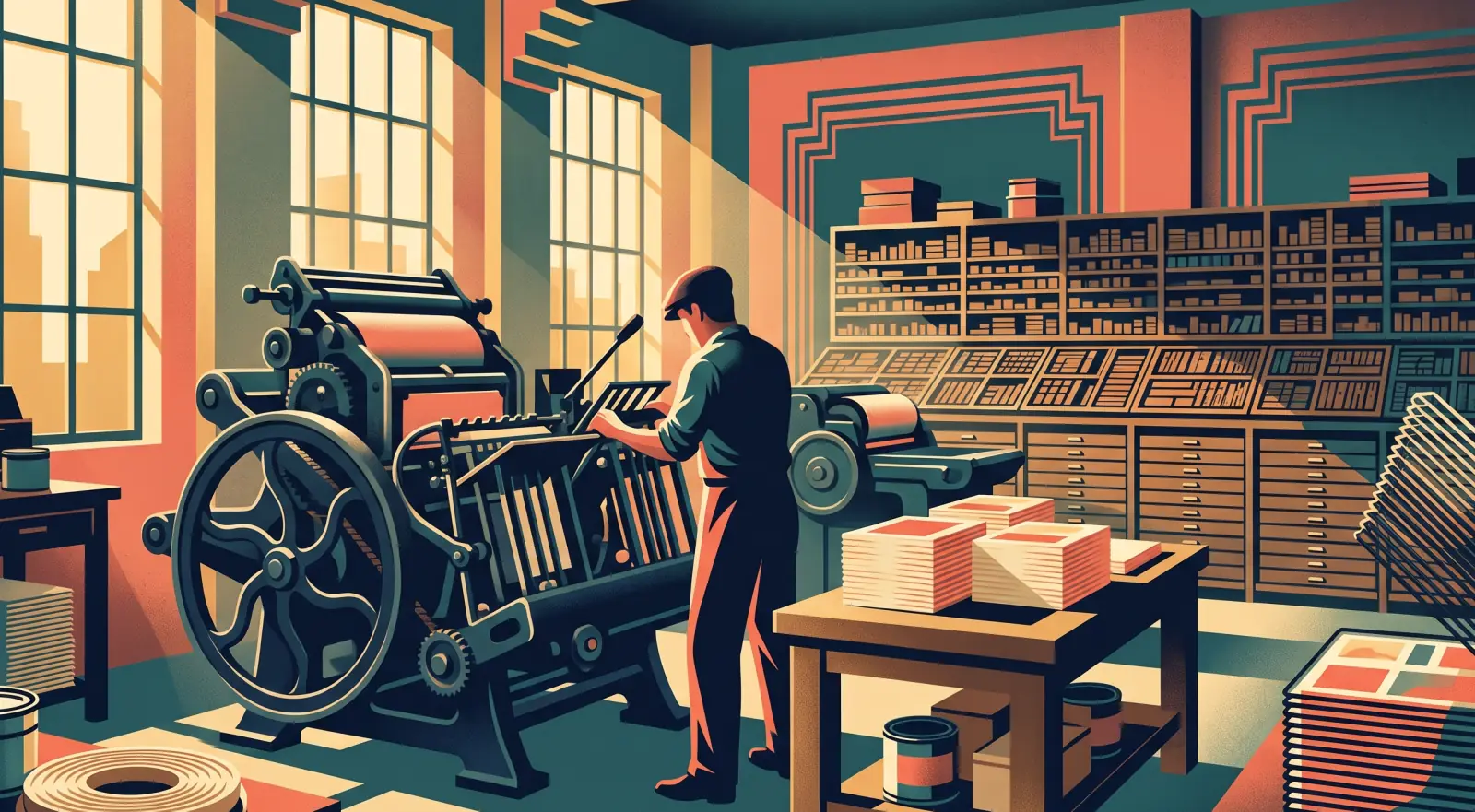
The first thing you notice in Arch 9 is the smell: oil, warm paper and the faint sweetness of ink that has been on the rollers since breakfast. The second thing is the noise. A platen press does not hum. It breathes, a slow clack and sigh, about once a second, all day.
Derek Wren is 71. He started here at sixteen, sweeping up for his uncle, and bought the business when his uncle retired in 1979. Since then the arch has printed wedding invitations, raffle tickets, funeral cards, band posters and, for one strange month in 1994, ten thousand labels for a pickle maker in Otley.
Under the arch
The shop is one long brick tunnel under the railway. Trains pass overhead every few minutes, and the type cases rattle gently in their racks each time. Derek has stopped hearing it. Visitors flinch.
Along one wall stand forty wooden cases of metal type, each one a drawer of tiny letters sorted by size and style. Some of the faces are older than Derek. A few are older than the arch. He knows each one by its feel as much as its look, and can tell a worn letter from a sound one by running a thumb across it.
At the far end, under the only window, is the press itself: a cast iron platen machine, painted green long ago and rubbed back to metal where hands have pushed it for sixty years. It is the subject of our cover, and of most of Derek's stories.
Setting a line by hand
Setting type is slow in a way that is hard to describe until you see it. Each letter is picked from its case and placed, upside down and back to front, into a small steel stick held in the left hand. Spaces are thin pieces of metal of different widths. A single line of a wedding invitation can take five minutes.
The proof
Before anything is printed, Derek pulls one proof on a scrap of newsprint and reads it backwards, then forwards, then out loud. Misprints in metal are expensive. In 47 years, he says, only two have reached a customer, and one of those was the customer's own spelling.
A computer can do it in a second. It just can't make you want to touch the card.
Derek Wren, Arch 9
What happens next
The railway company wants the arches back for a new walkway, and Derek, by his own account, is ready to stop. The type cases are going to the print studio at the art college, where students will learn on them. The press is harder to place; it weighs more than a small car.
His last job, in March, will be the invitations for his granddaughter's wedding. He has already chosen the face, an old Caslon cut that came to the arch with his uncle, and he has set the first line twice, just to be sure.