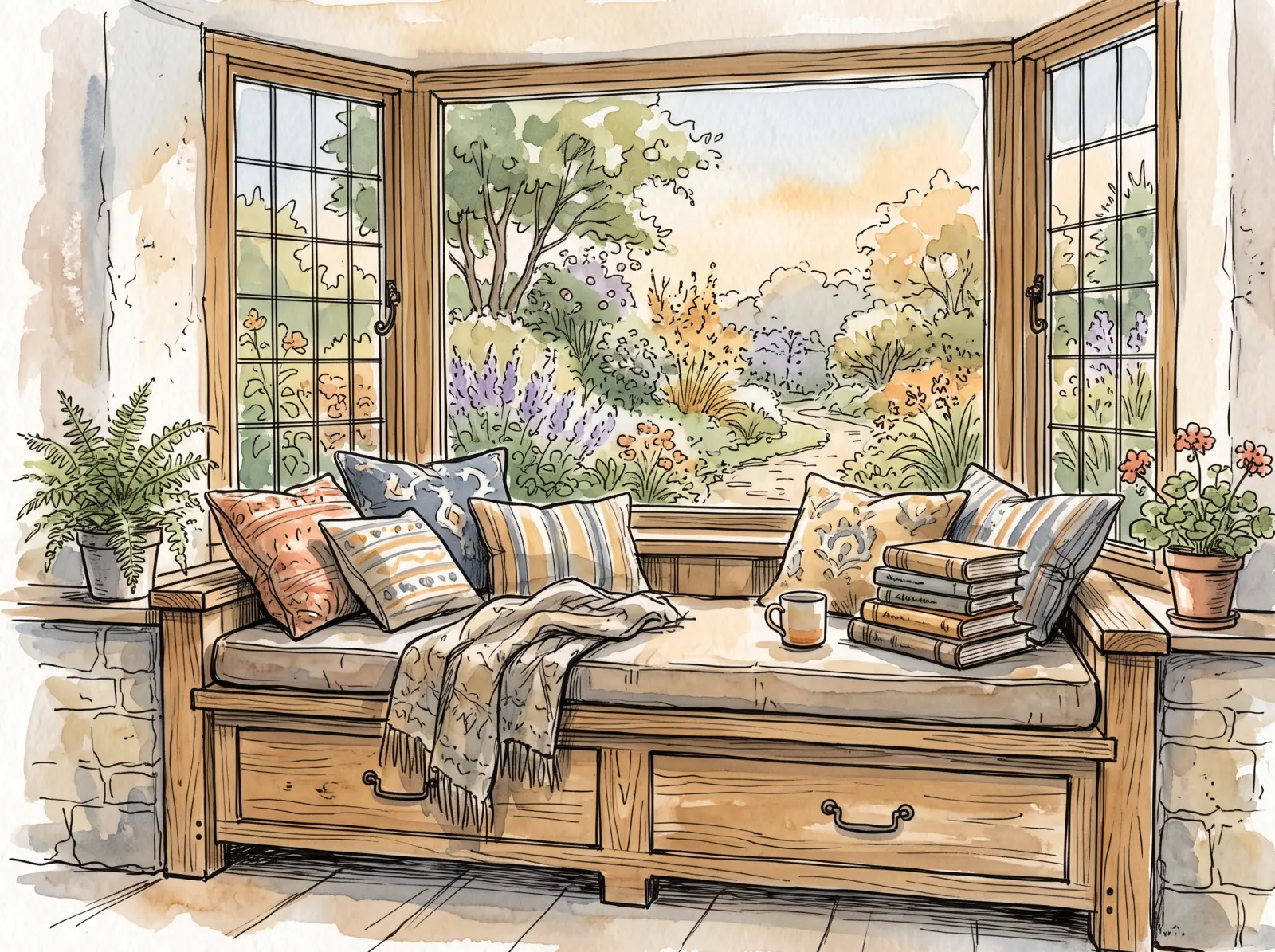
Most staircases are made from timber bought by the cubic meter. This one came from a single tree that fell on our client's own land. Here is the whole story, from the storm to the first cup of tea carried up it.
Chapter 1The tree
The oak stood at the bottom of Ruth and Alan's field for about 180 years. In the February storms of 2023 it came down across the beck, and they rang us the next morning to ask if any of it could be saved.
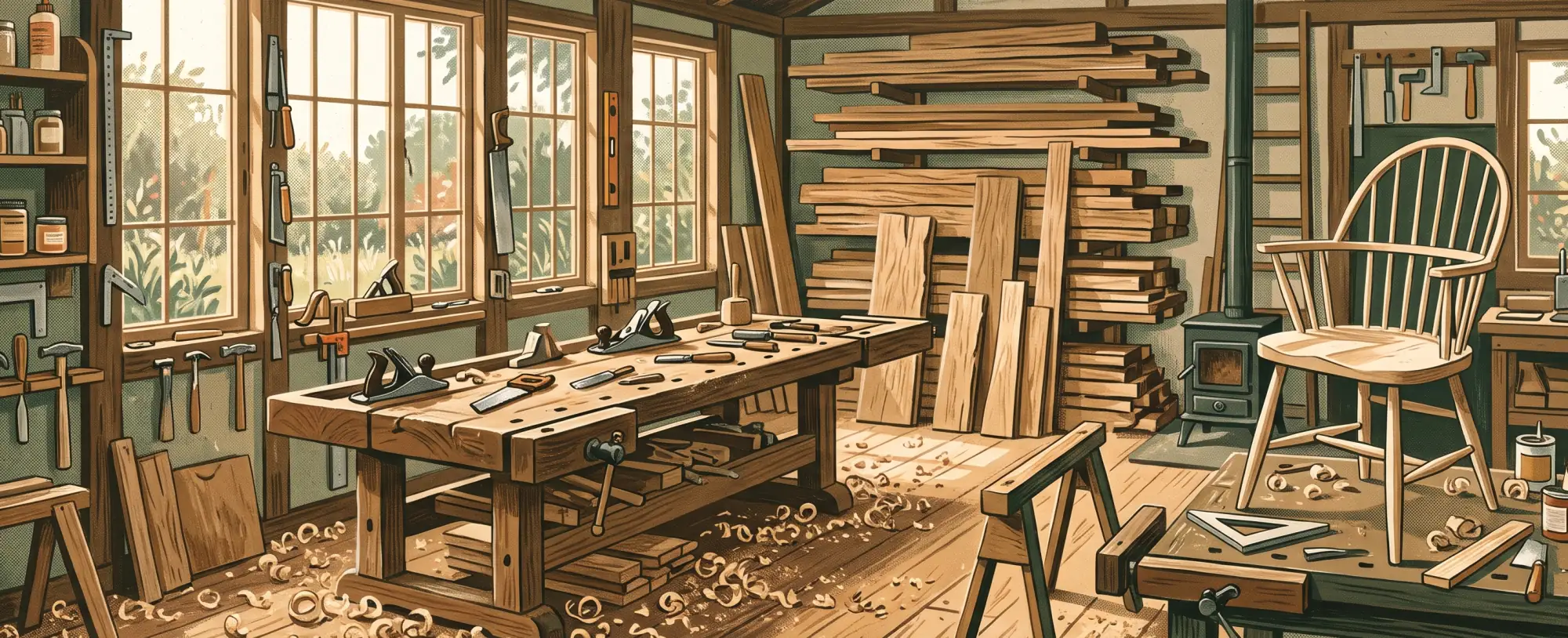
Most of it could. A local sawyer milled the trunk on site into thick boards, which came back to the workshop on a borrowed trailer and went onto the racks with spacers between them. Oak dries slowly, roughly a year for every inch of thickness, so the boards sat there for two winters while we got on with other work.
By the time we started, the timber had moved, cracked in places and darkened. That is normal. It is also why you choose the boards for a staircase carefully: the straightest grain for the strings, the widest, calmest boards for the treads.
Chapter 2On paper
A staircase has to fit the house to the millimeter, and an old house is never square. We measured the stairwell three times, then drew the whole staircase full size on sheets of board laid across the workshop floor.
Drawing it full size shows you things a small drawing hides: where a step will sit under a window, how the handrail will feel at the turn, whether a tall visitor will hit their head on the landing.
Chapter 3At the bench
The strings, the two long sides that hold the steps, came from one board split down the middle, so the grain runs on from one side to the other. The housings for the treads were routed, then cleaned up by hand with a chisel, all 28 of them.
Choosing the treads
We cut fourteen treads and two landings from the widest boards, keeping the sapwood and the cracks for the hidden parts. Each tread is numbered on its underside with the tree's name, which Ruth and Alan asked for: Old Field Oak.
Chapter 4Fitting day
The staircase went in over three days. The old softwood stairs came out on the first morning; by the second evening the new strings and treads were in, and on the third day we fitted the handrail and the newel posts and oiled everything twice.
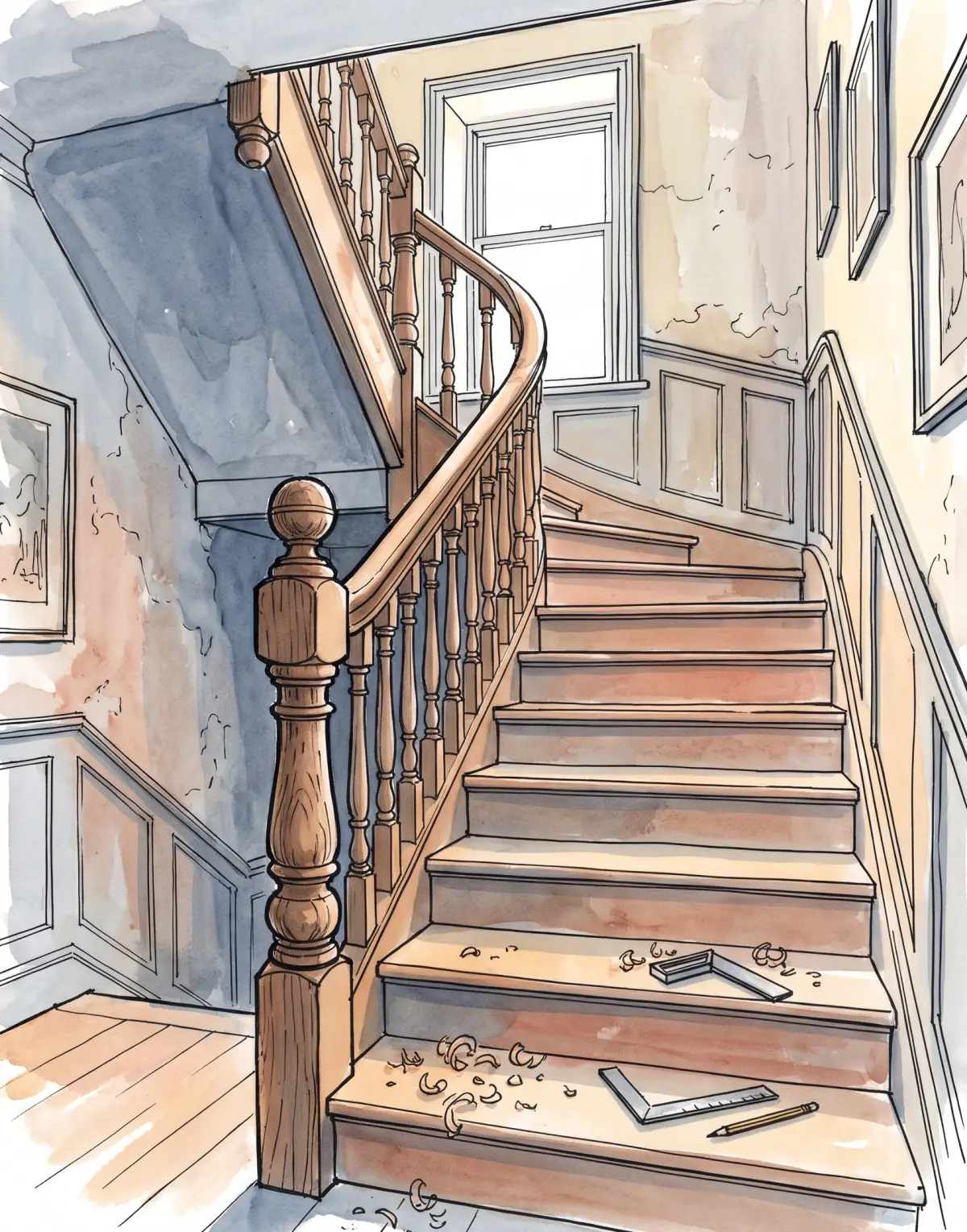
The first person up was Ruth, carrying two mugs of tea. Her verdict, at the top: "It still smells of the field."